
 somaiya.edu.in

Political Science
About Department
About Department
The Department of Political Science is committed to providing a rigorous and comprehensive education that integrates theoretical foundations with practical applications in political science. Our mission is to cultivate a deep understanding of political principles and their real-world implications, fostering critical thinkers and leaders equipped to navigate the complexities of governance and politics and develop innovative solutions to address them.
It stands at the forefront of academic innovation, offering a transformative education that seamlessly blends theoretical depth with practical insight. The curriculum fosters critical analysis of the intricate relationships between political ideas, historical events, institutions, and policymaking. Aligned with the National Education Policy (NEP) 2020, the department ensures a modern and interdisciplinary approach to education. Students benefit from practical learning experiences through seminars, workshops, field trips, and conferences, which enhance their critical thinking and problem-solving skills.
The department emphasizes legal literacy and citizens' rights, equipping students with practical knowledge to address contemporary societal challenges effectively. Graduates are prepared for diverse careers in politics, governance, law, public administration, and beyond. By integrating rigorous academic training with experiential learning opportunities, the department ensures students are well-equipped to navigate complex political landscapes and contribute meaningfully to society
HOD and Faculty Profile
| Sr.No. | Name | Designation | Profile |
|---|---|---|---|
| 1. | Dr. Nitin Sudam Mohod | Associate Professor | View |
Academics
Programme
Syllabus
Our curriculum offers a robust and interdisciplinary approach to understanding public administration, political theory, electoral politics, and psephology. Students engage critically with governmental structures, administrative processes, and India’s administrative challenges.
The program emphasizes foundational principles like democracy, justice, liberty, equality, and the social contract, facilitating an exploration of political thought from classical to modern governance models. Electoral systems, voting behavior, and the media's influence on public discourse are also examined, alongside legal literacy and citizens' rights.
To enhance student engagement, the department employs several strategies:
- Interactive Learning Opportunities: Seminars, workshops, field trips, and conferences connect theoretical knowledge with real-world applications.
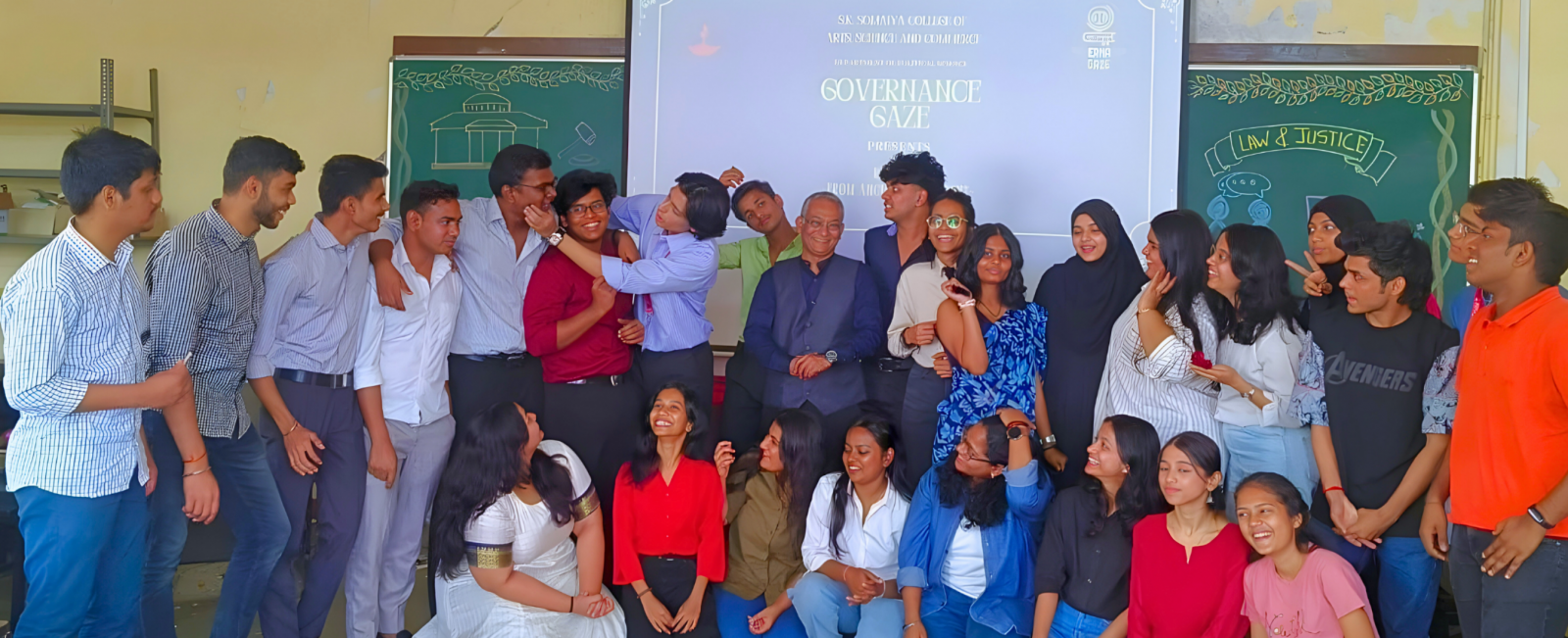
- Governance Gaze Society: Organizes discussions, debates, and guest lectures to foster intellectual discourse and leadership skills.
- Experiential Learning: Role-playing, project-based learning, and inquiry-based exercises promote problem-solving skills.
- Collaborative Engagement: Group discussions and teamwork foster a sense of community.
- Career-Oriented Activities: Guidance on professional development and networking opportunities prepare students for governance challenges.